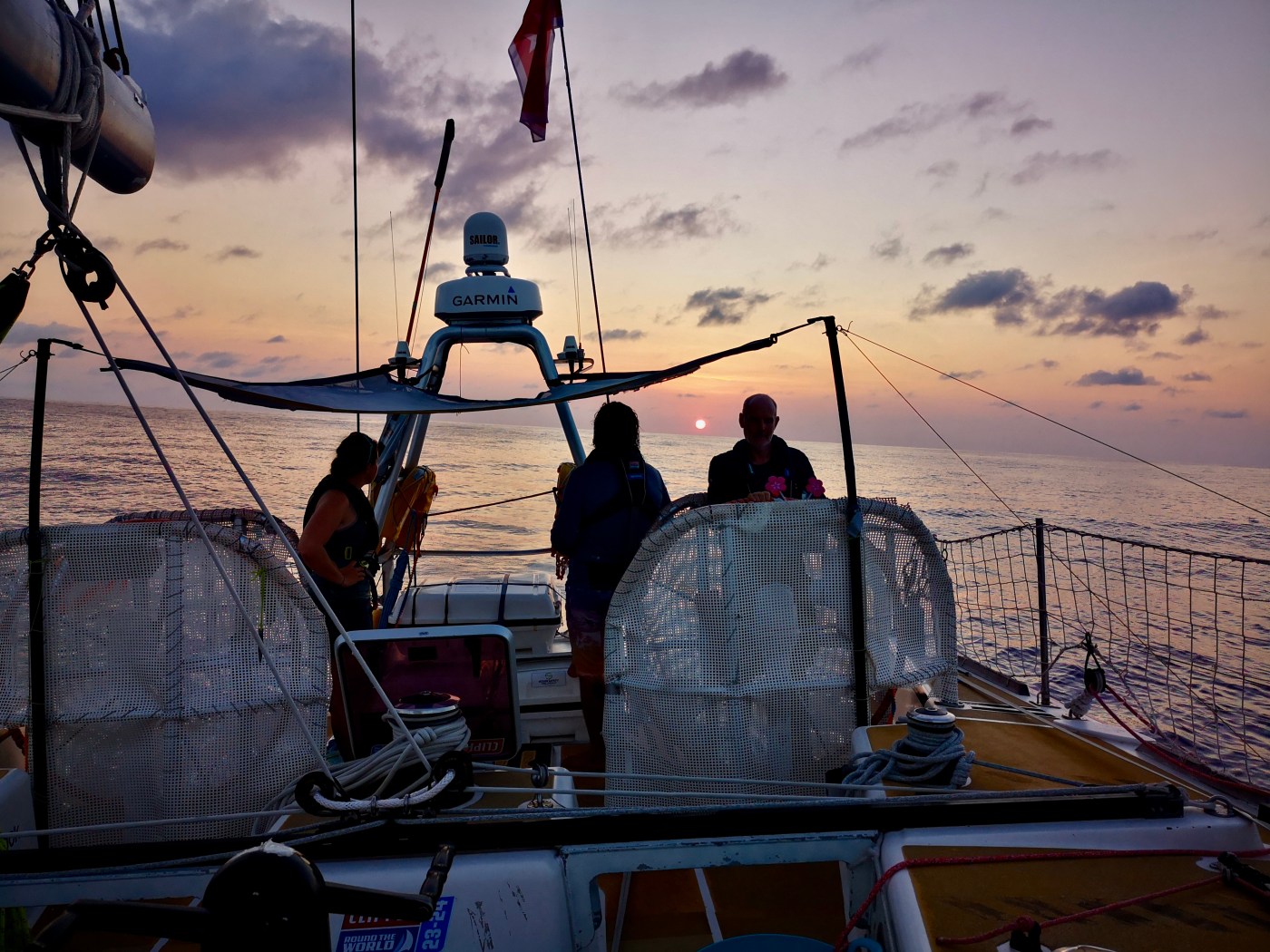
This is the second in a series of blogs exploring the many dimensions of participating in the Clipper Race. In this entry, I focus on the sailing, the core of the journey, which is as relentless as it is exhilarating. Ocean racing is not just about pointing the boat in the right direction and sailing as fast as possible; it’s about navigating through unforgiving environments, braving extreme weather, and adapting to ever-changing conditions. The scale and intensity of this challenge are unparalleled.
When I reflect on my journey, I can’t help but marvel at how the routine of sailing; hoisting sails, plotting courses, and adapting to the wind, became second nature to the crew. Yet, these tasks, no matter how practiced, are far from mundane in the context of ocean racing.
As detailed in my skipper’s blog from September 28, the daily rhythm onboard is consumed by sailing:
“So, let’s talk sailing. We haven’t spoken much about sailing in our blogs, that might seem odd as most of what we do onboard is live and breathe sailing. If we’re not up on deck trimming sails and changing headsails, we’re down below looking at tactics or attempting rest. It’s sometimes difficult to talk about something that becomes so natural that you stop thinking about doing it. For example, getting up and walking to work feels the same as us rolling out our bunks, getting on deck and surfing a Clipper 70 down Atlantic rollers. Something that we will all take for granted at the end of this journey.”
But the reality of sailing is that it’s never static. Just when you think you’ve settled into a rhythm, new challenges emerge.
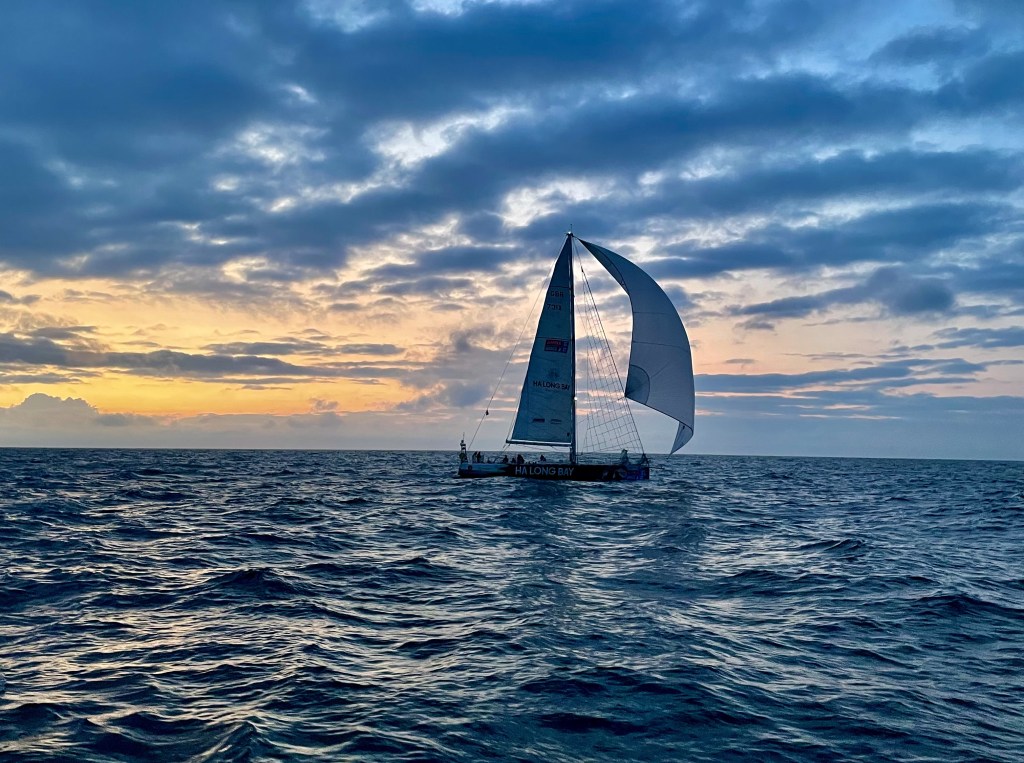
Take, for instance, our first “kitemare” during the race. It was a lesson in perseverance:
“A few days ago, the inevitable happened. Our first kitemare of the race. On the first hoist of the Code 2 (our big downwind spinnaker) it got caught around the spreaders so had to be dropped. On second attempt we crash gybed, so the spinnaker had to be dropped again. On the third attempt we hoisted the spinnaker with an hourglass (where the spinnaker wraps around itself) so back down it came for the third time. The kite went up majestically on the fourth attempt.”
February brought its own set of challenges. From dodging fishing boats and nets in the South China Sea to navigating wind holes and erratic weather systems, the race demanded constant vigilance and adaptability:
“Safe to say we’ve all been a little bit busy onboard. Although, it now seems we have made it into the trade winds, there’s still lots of localised systems developing around us.
This means we may have consistent wind for a few hours, but we will soon be met with all kinds of conditions. Sometimes an increase in wind, sometimes no wind, sometimes a small back or veer of the wind, sometimes a 180-degree shift. Making the most out of the ever-changing wind means many, many evolutions; kite up, kite down, wind seeker up, Yankee up, reef in, reef out etc. Always keeping us busy.“
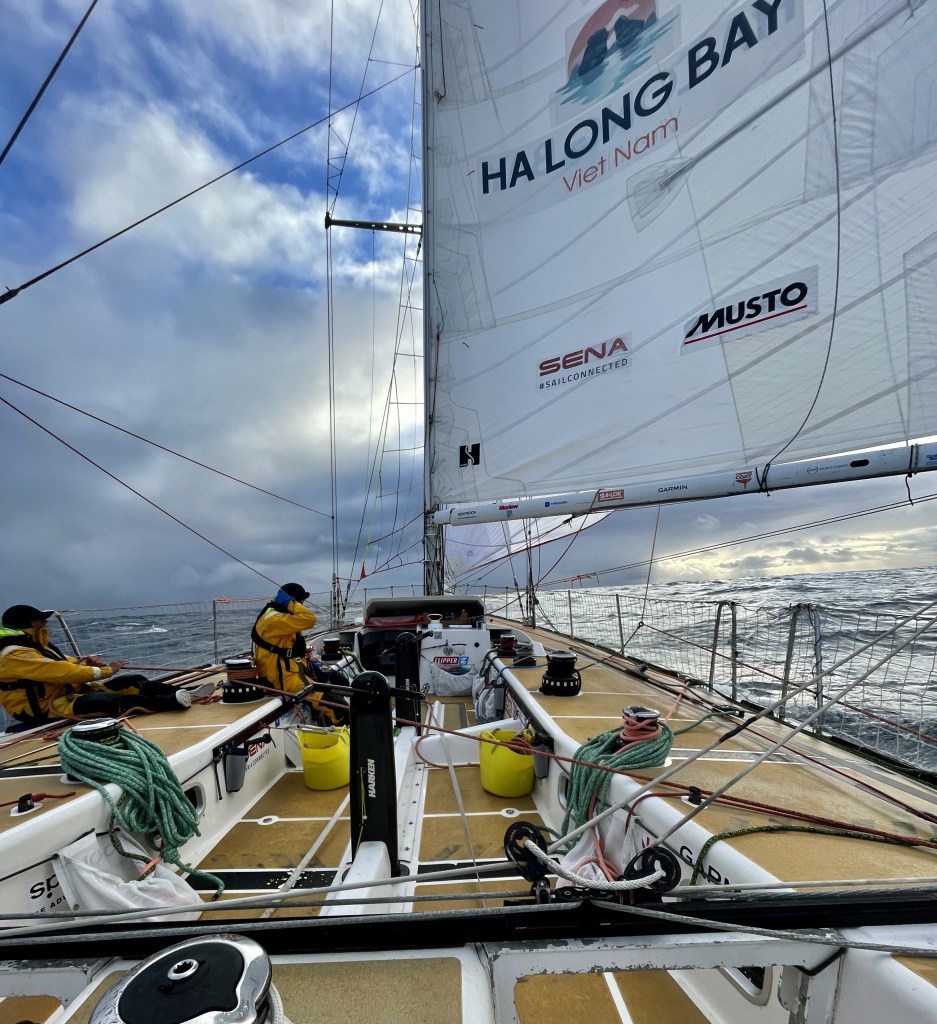
Navigating through the South China Sea brings its own unique challenges, particularly when dealing with hundreds of fishing boats and their pots scattered across the water. In such areas, maintaining an optimal course often takes a back seat to simply avoiding obstacles. Certain members of PBSC (my local dinghy sailing club) would likely raise an eyebrow at the sheer number of fishermen crowding what feels like a racecourse. A vivid example of this occurred as we approached the finish line into Zhuhai, China. We snagged a large fishing pot, forcing us to come to an abrupt halt and send someone over the side to untangle it. This delay ultimately dropped us to 9th place over the line. In moments like these, you simply have to roll with it. That’s ocean racing for you. As we often say on the Clipper Race: “You get what you get, and don’t complain.”
“We’ve had a difficult past couple of days navigating through wind holes whilst surrounded by fishing boats and pots. Avoiding these fishing boats often means sacrificing racing to clear them so that’s been occupying our focus. We never really know exactly what fishing boats are doing so at first, we were slightly more dubious but after watching them for a few days we’re starting to see trends in what they’re doing so we’re getting more comfortable navigating around them, enough so for Hannah to put a fishing t-shirt on.“
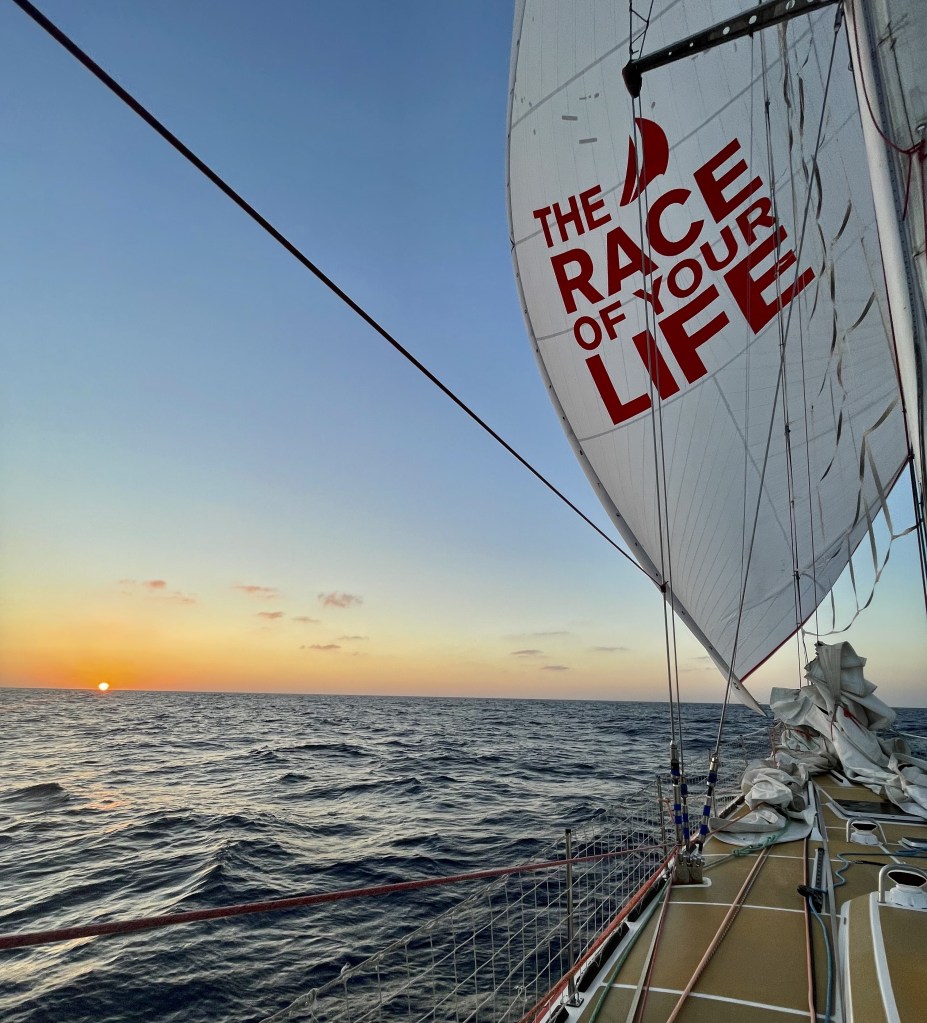
Then there’s the never-ending task of maintenance. At sea, routine repairs are a daily occurrence, some as straightforward as adjusting lines and others as daunting as scaling the 30-foot mast. Beyond the expected wear and tear, we also face the inevitable surprises: broken steering chain links, a lightning strike that fried crucial electronics, and a malfunctioning water maker, to name a few. Despite these challenges, the knowledge that we’re in the midst of a race keeps us focused and driven. Every repair, no matter how small or monumental, is done with the goal of pushing the boat harder and faster toward victory.
“When you fly a sail, it’s held up by a bit of rope called a halyard. When you fly a kite there is so much movement within the sail as it inflates and deflates, as our apparent wind speed increases and decreases so often as we surf. This movement in the halyard causes it to chafe on the block at the top of the mast, for this reason we often put two halyards on kites when hoisting.
We were shown the necessity of this last night, when one of the halyards snapped as it had chafed almost all the way through. Had we not had two halyards on, the kite would have fallen into the water and the crew would’ve had a long day of pulling it back onboard.
This did mean we had to cut, re-whip and re-chafe, and protect the halyard before running it through the block after it snapped, sounds easy… When I asked the crew if anyone wanted to go up the rig to re-run the halyard through the block at the top, Peter Barry jumped up and very enthusiastically volunteered himself.
So, up he went, not an easy task might I add, but he did it. A few hours after the task had been completed and we had the kite flying again he confessed that he was so enthusiastic about going to re-run the halyard because it meant we could fly a kite, meaning we would go faster, meaning we were more likely to get to Punta in time to watch the rugby. ”
Sailing in the Clipper Race is not just about technical skill; it’s about resilience, adaptability, and teamwork. From kitemares to wind holes, from tangled fishing pots to snapped halyards, every challenge is a test of perseverance. Yet, it’s these very moments that make ocean racing so rewarding.
As we continue through the trade winds and unpredictable seas, the saying “you get what you get, and don’t complain” keeps us grounded. The ocean will always throw something new at us, but it’s how we respond, together, that defines this incredible journey.


Leave a Reply