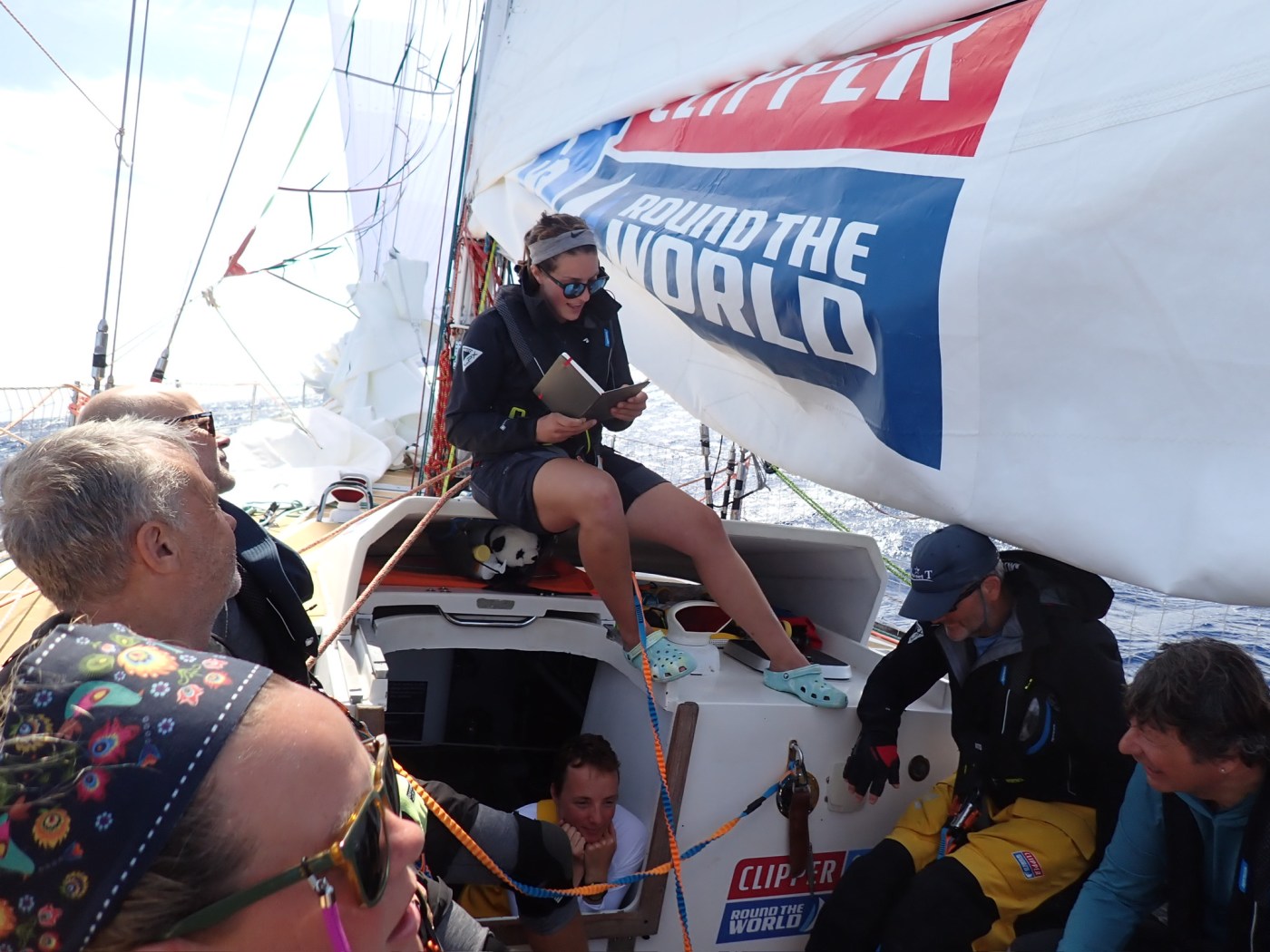
There’s a quiet misconception that lingers around this race; that a few weeks of training, drills in the Solent, and a brisk hop across the Channel can somehow prepare you for the reality of the open ocean. It’s not anyone’s fault. It’s just impossible to simulate the magnitude of oceans like the North pacific or what it means to be relentlessly cold, wet, and tired in a way that seeps into your bones and stays there.
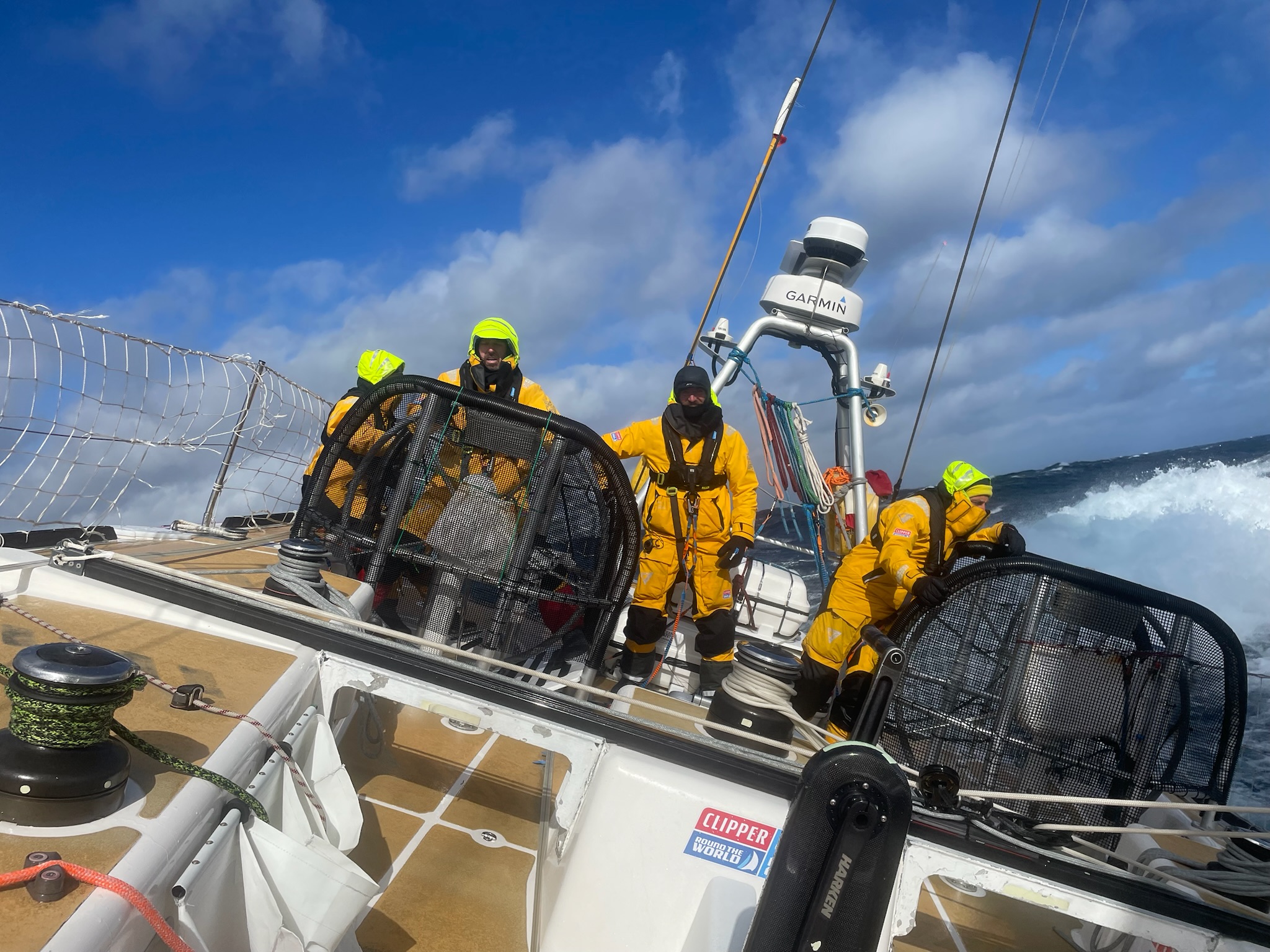
In the North Pacific, exhaustion is not something you recover from, it’s something you carry. Sleep is not rest. Even off watch, your body is braced, subconsciously anticipating the next slam. You wedge yourself into your bunk, but there is no stillness. The boat crashes into waves, and you are thrown, again and again, into the edge, the ceiling, the limits of your own physical resilience. You wake not because you are rested, but because you are needed.
And still, you perform. You climb on deck after hours of seasickness, your body depleted, your stomach hollow, your mind fogged. There is no easing back in. You trim, you grind, you helm. You perform physically when your body is asking you not to. That, in itself, is a kind of labour we don’t often name. But the deeper weight is not physical, it’s emotional.
On land, we curate our lives. We choose who we spend time with, who we confide in, who understands us. Even in workplaces where choice is limited, there is always an end to the day. A door you can close. A walk you can take. A home where you can unravel, safely. At sea, there is no exit. You live within the same small, shifting space with a group of people you did not choose, bound together by circumstance rather than shared identity. There is no stepping away from tension. Every interaction carries weight because there is nowhere else to go. Relationships are intensified. And then there is loss.
We have lost four round-the-world crew members through injury. None have returned (yet….. come back Susie). They are not replaced. Each departure leaves a gap, very noticeable in manpower, but in the fabric of the team. We sail on with fewer hands, which means less sleep, more work, and a heavier load for everyone left behind. But it’s more than logistics.
You lose people you thought would be there at the finish line. People you imagined sharing the full arc of this journey with. There is a grief in that, an unspoken recalibration of expectations, of memories that will now be incomplete. We wonder how they are coping on land. There must be a strange tension, relief and rest intertwined with disappointment. They are still part of this team, still invested, still watching. Perhaps even wishing they were back, despite everything.
For those who set out to go all the way around the world, the loss is profound. This isn’t just a trip; it’s a commitment, a pause on life as they knew it, made with the belief that they would complete the full circumnavigation. The story is no longer whole in the way they imagined. And for those still onboard, the emotional labour continues. Holding space for each other. Carrying the physical strain. Managing the unrelenting environment. Adapting to loss while still pushing forward.
We are currently last on the leaderboard, and at points in this race have been sitting at the back of the fleet, and that carries its own emotional weight. But I remind the crew that this position is not a true reflection of our ability to race this boat. We’ve already proven what we’re capable of: we have had a podium place, on another race we were sitting in the leading 3 before we hit a whale, we clawed back two positions from 400 miles behind after a medivac, and have pushed through countless other circumstances that have shaped our results across other races.
We all have to keep perspective. There is still a long way to go, and it’s not over until it’s over. So we stay positive, we keep pushing, and we continue to reach for the podium. And at the end of the day, this is about far more than where we sit on a leaderboard. And there is another layer to this, the emotional labour of leading this team.
We have had four First Mates now. And that has been one of the hardest parts of this journey. I started building this team’s culture months before departure, long before we ever slipped lines. Training alongside my first First Mate, shaping not just how we sailed, but how we showed up for each other. What we would tolerate. What we wouldn’t. The standards, the tone, the small everyday behaviours that become culture.
Then, just weeks before departure, everything shifted. A new First Mate stepped in. Suddenly, the leadership dynamic had to be rebuilt under pressure, with very little time. Getting that shared understanding, true buy-in, not just surface-level agreement, was a steep curve. Charlie embraced it fully. He understood what we were trying to build. And then he made the brave decision to leave. So the process began again. Another First Mate, brought in at a moment’s notice. No shared training history. No time to slowly build alignment. Just immediate immersion into a team where the culture is already formed and non-negotiable. That’s a big ask. To step into a crew where expectations are not just written down, but lived. Where culture isn’t explained, it’s embedded in every interaction, every decision, every standard held. To mould yourself to that, quickly, under pressure, while also trying to lead, is no small thing. And again, it resets.
Another First Mate, this time from a completely different team. Someone who has been shaped by a different culture, a different leadership style, a different way of doing things. And within hours, they are expected to understand ours. To believe in it. To reinforce it. For Faith, that is a huge challenge.
And for me, it is a different kind of fatigue altogether. Because each time, I am not just sailing the boat. I am re-explaining, re-holding, re-defending the culture we built. Re-establishing trust. Re-aligning leadership. All while the race continues, the boat keeps moving, and the crew still needs consistency. The physical exhaustion, the cold, the wet, the relentless motion, pales in comparison to that. Because the boat can run on tired bodies. But it cannot run without a cohesive team And holding that together, again and again, is the real, unseen weight of this role. It’s having this team behind me, knowing they have my back that keeps me going and keeps us all reaching for our best performance.


Leave a Reply