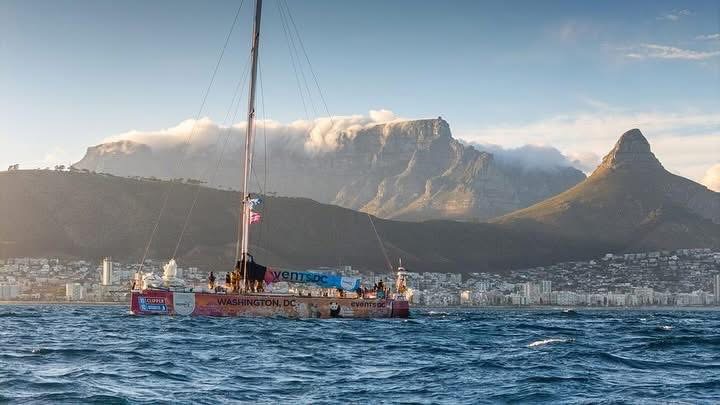
DC supporters update 21st November
By now many of you will know that we had an encounter of the very large and very unexpected kind: we hit a whale in the South Atlantic. I’m sure you’re keen to know what really happened, so here goes.
After nearly one hundred thousand miles at sea, you develop a finely tuned sense for the boat, its rhythms, its movement, its soundtrack. Even in my deepest sleep, anything that sits outside those rhythms jolts me awake. This time, it was sunrise when I heard three heavy bangs. Instantly I knew we had hit something. A moment later came the call for all hands on deck.
I climbed out of my bunk and calmly instructed Eagles Watch to return to their bunks. Filling the deck with anxious crew wouldn’t help us assess the situation. Later, in Cape Town, my brother asked, “But how did you know you wouldn’t need to abandon ship?” The truth is: in that moment, I didn’t. But what I did know was that panic helps nobody. If evacuation had been necessary, it would have needed to be done calmly and methodically: launching the lifeboat, gathering the grab bag with passports and essentials, ensuring water and the satellite phone were with us. Less haste, more speed.
Very quickly we established that there was no immediate water ingress. That allowed us to make the next set of assessments. At this point we had a person on each helm and one reported that their steering movements weren’t producing a response. We were sailing downwind in 40 knots with the Yankee 1 and full main sail up and compromised steerage put us at serious risk of a crash gybe. A crash gybe in those conditions can cause serious damage to the boat and particularly the rig, a bad crash gybe could have caused the rig to come down.
A closer inspection showed one of our two rudders sitting at a jaunty, and very wrong angle. It had caused damage to part of the hull. The two rudders are connected through a linking bar, so they move in synchrony, allowing us to helm from either side. But with one damaged, the only option was to disconnect them. That sounds easy in theory, but those linkages are strong. I lay on my back, knees to my chest, feet braced against the bar and kicked until it came free (thank goodness for CrossFit; who knew all those squats would be so useful at sea?)
With the rudders no longer connected and the damaged one compromised, we could only sail on one tack, which meant only one direction relative to the wind. That direction was north. Away from Cape Town. Away from where we needed to be. The only hope of turning toward our destination was a change in wind direction and strength. For the first time all race, light winds suddenly became a blessing, the flatter the boat, the more reliable our remaining steering.
We spent a day or two continuing to “race” in the wrong direction. We needed that time to recalibrate our expectations and accept that our race had effectively ended. Immediately after the whale strike, we were in problem-solving mode: mechanical, focused, calm. But accepting that the race was over, with nearly 800 nautical miles still between us and land, that was the real emotional challenge. For the first time in my sailing life, I felt at the mercy of the weather. It looked for a time like Namibia would be our destination. Later, the wrong side of Cape Point. What choice we had was limited to patience and attitude.
One of our values on board is about choosing your attitude. Viktor Frankl wrote in Man’s Search for Meaning, based on his time in four Nazi concentration camps:
“Everything can be taken from a man but one thing: the last of the human freedoms — to choose one’s attitude in any given set of circumstances.”
If prisoners of war could choose a positive attitude in conditions far darker than anything we will ever know, then surely we can choose ours here on Washington DC.
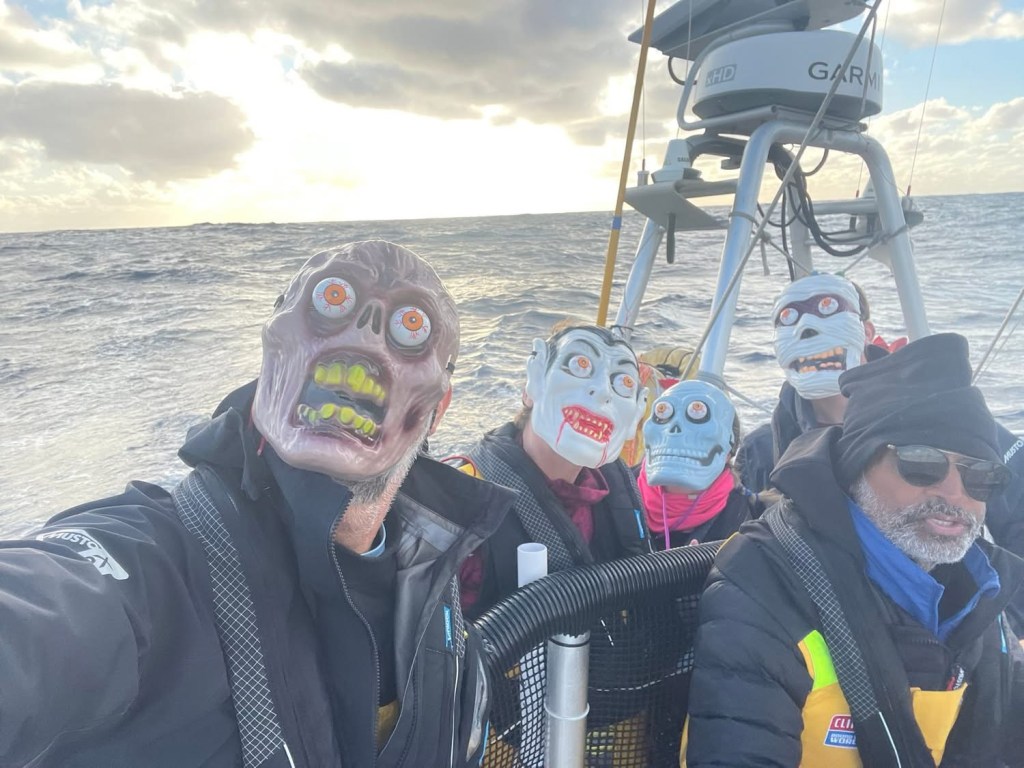
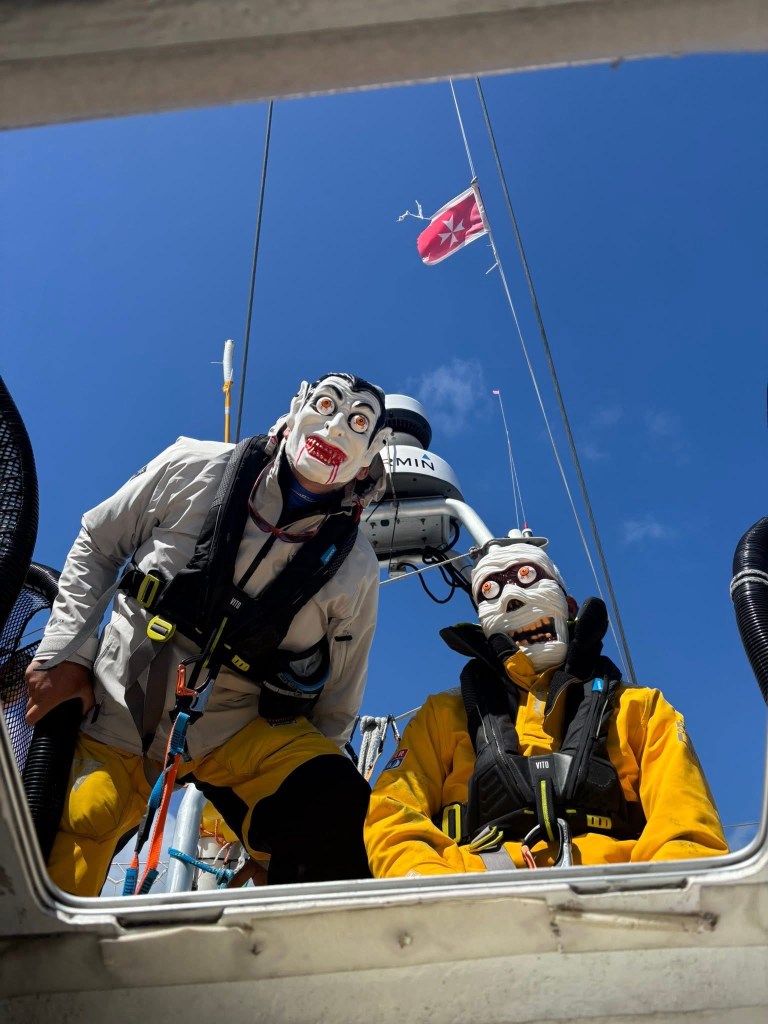
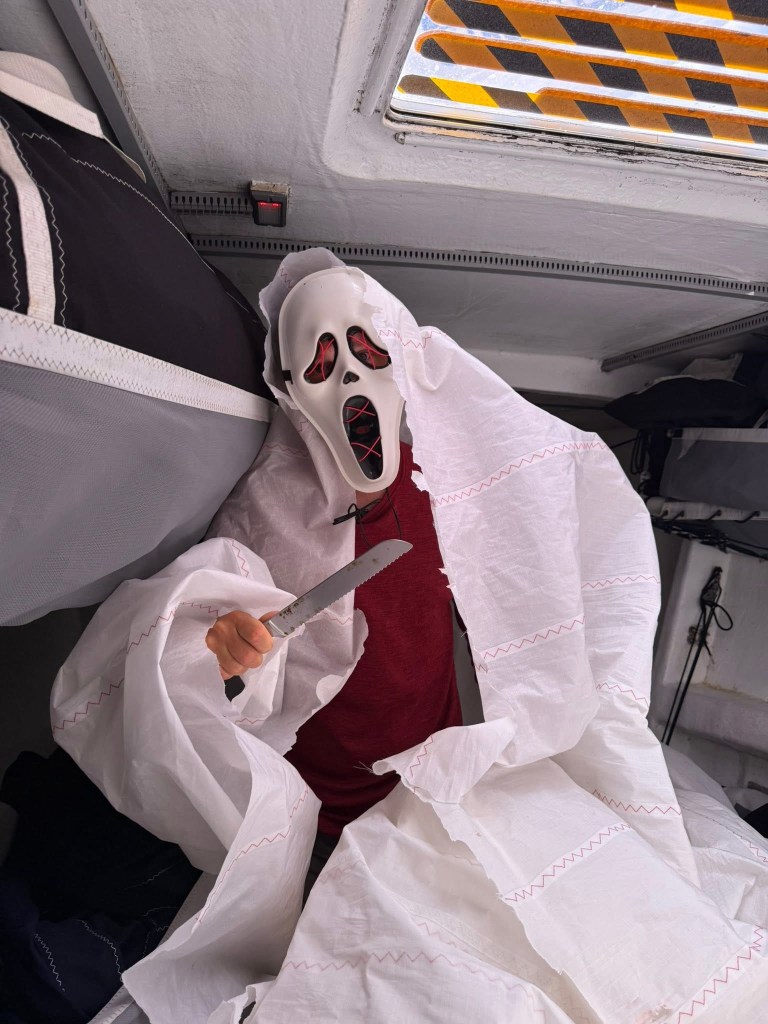
The title of this blog reflects our onboard vlog that hinted at this event. Clipper HQ were understandably cautious about communicating a whale strike and on board we didn’t take it lightly. Concern for the whale weighed heavily on our minds and came up often in our conversations. We can’t know the fate of the whale we hit, but we hope that, as a smaller sailing vessel, the damage was greater to us than to them.
And perhaps there’s an uncomfortable conversation here that we, as sailors, should not shy away from. Whale strikes happen far more often than people realise, not just with yachts, but with vast container ships and cruise liners where the impact may go unnoticed by everyone onboard. As sailors, we hold a responsibility to protect the oceans not because they serve us, but because it is morally right and we must look beyond ourselves.
Fair winds Ella


Leave a Reply